Behind the Formula: How Cosmetic Formulation Really Works
Cosmetic Forumation: The decisions behind every formula
Let’s stir up some magic in the lab with today’s hot topic of cosmetic formulation: what actually happens behind a cosmetic formula, and why are the decisions you make as a cosmetic formulator just as important as the ingredients you choose?
When you first start learning cosmetic formulation, it can be tempting to look at a formula as a list of ingredients with percentages attached. Water, glycerin, emulsifier, oil, botanical extracts, preservative, fragrance, done. Surely adding more exciting actives makes a formula better, using more expensive ingredients makes it more premium, and if the percentages add up to 100%, we are already halfway there?
Not quite.
A professionally developed cosmetic formula is actually a long chain of interconnected decisions. Change one ingredient and you may change the viscosity. Change the viscosity and your packaging might no longer work. Change the pH and an active ingredient might perform differently. Replace a preservative and suddenly your challenge test becomes considerably more interesting than you wanted it to be.
This is one of the biggest mindset shifts when you are studying to become a cosmetic formulator. Learning what ingredients do is important, but learning how to make decisions about those ingredients is where formulation starts becoming a professional skill.
Cosmetic Formulation Starts With a Brief, Not a Beaker
One of the biggest misconceptions beginner cosmetic formulators have is that formulation begins when you start weighing ingredients.
It actually begins much earlier.
As a cosmetic formulator, you need to learn how to translate an idea into technical requirements. If someone asks you to formulate a “luxurious moisturising face cream for sensitive skin”, your first reaction should eventually become: I have questions.
How rich should it feel? What does luxurious mean in this context? Are we talking about a velvety cream that leaves a protective after-feel or something that disappears almost immediately? Is it going into an airless pump or a jar? Which markets is the product intended for? Is fragrance acceptable? What retail price is being targeted? Are there ingredient philosophies, certifications or marketing claims that matter?
Even something apparently simple such as “non-greasy” needs interpretation. One person’s beautifully nourishing cream is another person’s greasy nightmare.
This is why learning how to create and interpret a cosmetic formulation brief is such an important part of becoming a professional formulator. Your goal is not simply to formulate a cream, shampoo or serum that works. Your goal is to develop the right product for your customers, packaging, price point, market and manufacturing environment.
Every Ingredient Needs a Job
Here is one of my favourite rules of good cosmetic formulation: ingredients should earn their place.
That does not mean every ingredient needs to be glamorous. In fact, some of the hardest-working ingredients in your formula will never become the stars of a marketing campaign.
Your chelator probably will not get anyone particularly excited. Neither will the emulsifier keeping your cream together or the rheology modifier stopping your serum from running through your fingers. Yet removing one of these “boring” ingredients can sometimes cause far more trouble than removing the beautiful botanical extract featured on the front of the packaging.
On a personal note: I am way more excited about my rheology modifiers or emulsifiers than I am for actives and extracts. The way they influence texture and skin feel makes me giddy every single time I discover a new favourite! Soon, you will too!
As a formulator, you need to evaluate ingredients according to function, compatibility, concentration, pH requirements, processing conditions, stability, sensory properties, regulatory status, supplier documentation, availability and cost.
And sometimes, you need to say no to an ingredient that looks wonderful on paper. Not because the ingredient is necessarily bad, but because a wonderful ingredient can still be wrong for a particular formula.
If an expensive active brings little additional benefit because three existing ingredients already perform a similar role, adding it may simply increase the manufacturing cost. If a botanical extract creates a colour that changes during stability testing, you need to decide whether its benefits justify that instability (sometimes, the answer may still be yes!). If an ingredient requires a pH outside the ideal range for the rest of your system, you have another decision to make.
Good skincare formulation is not about putting as many exciting ingredients as possible into one bottle. It is about understanding why every ingredient is there and making those ingredients work together.
Texture Is Chemistry Too
Now we get to the part most formulators love experimenting with: texture.
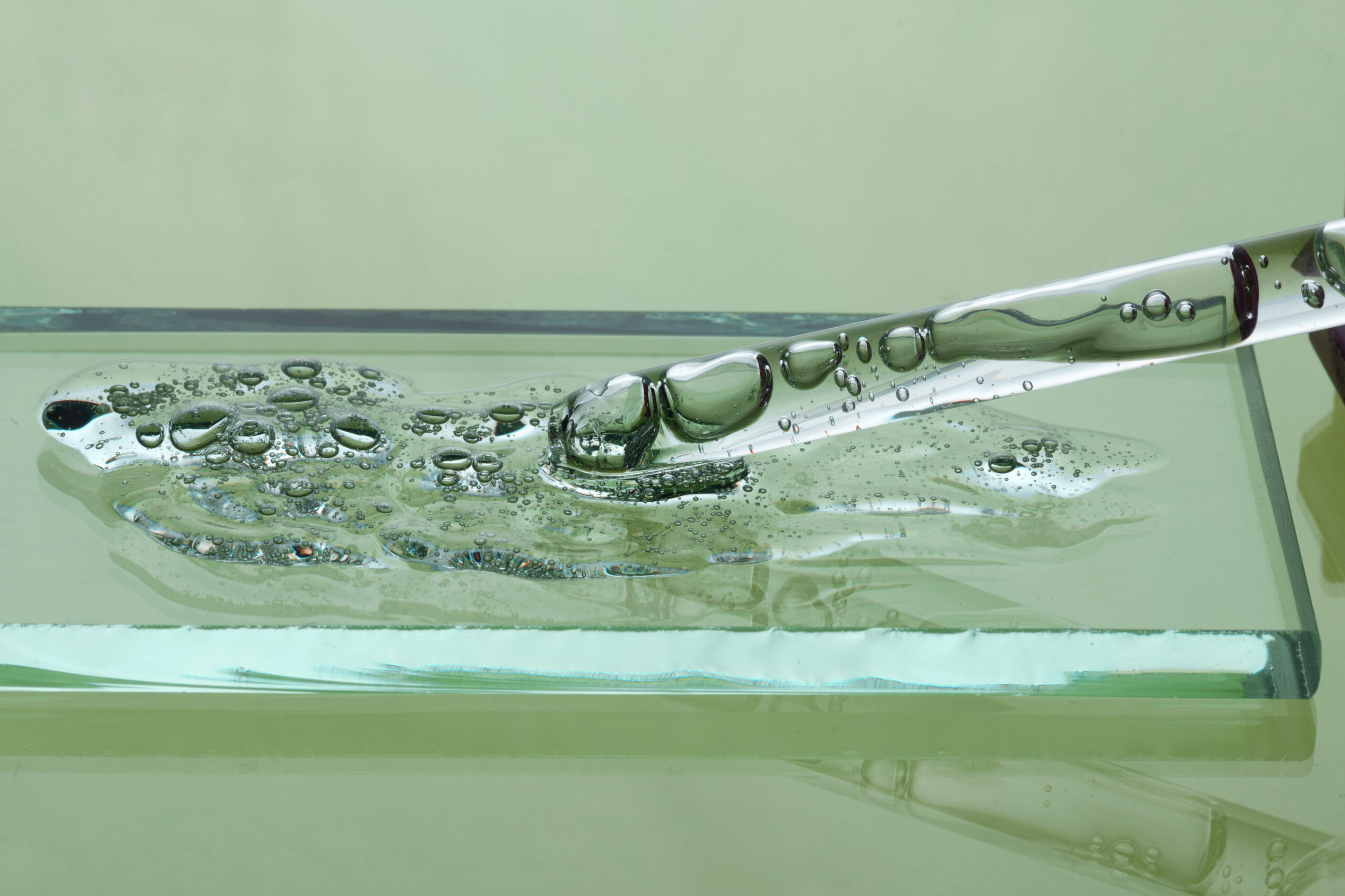
A serum that glides beautifully. A moisturiser with that expensive cushiony feeling. A hair mask that melts through curls. A cleansing gel that feels silky rather than sticky.
Those sensations do not happen accidentally.
As you become more experienced in cosmetic formulation, you start learning how emulsifiers, fatty alcohols, gums, polymers, oils, esters, silicones or silicone alternatives, humectants and other components influence slip, cushion, absorption, richness, tackiness, playtime, spreadability and after-feel.
As a cosmetic formulator, your biggest strength is writing down all the experiments that you do so that you can go back and read your notes for each ingredient you worked with. It makes formulation and ingredient selection much simpler as years go by! My own ‘Materia Medica’ if I may call it like that, is quite substantial now and yours will be too!
In skincare formulation, sometimes changing an ingredient by less than 1% creates a surprisingly noticeable sensory difference.
How does it spread? How quickly does it absorb? What happens thirty seconds after application? Does it pill? Is there drag? Is the finish greasy, powdery, waxy, silky or tacky? How much product does the consumer naturally use?
Texture also needs to work with the intended packaging. A gorgeous cream that cannot travel through the selected pump is not a successful commercial formula. Neither is a shampoo that takes half an eternity to leave the bottle.
As a formulator, packaging should therefore enter your cosmetic product development process much earlier than you might initially expect.
More Expensive Ingredients Do Not Automatically Make a Better Formula
This is an important lesson to learn before you start creating formulas for your brand. The most expensive version of a cosmetic formula is not necessarily the best version. It’s also not necessarily the worst either.
Imagine you are developing a sensitive-skin moisturiser containing several soothing ingredients. You could continue adding trendy actives until the INCI list looks spectacular, but eventually you reach a point where the extra cost may no longer deliver enough additional formulation or marketing value.
As a professional cosmetic formulator, cost needs to become part of your thinking because ingredient cost does not disappear after development. It follows the formula into every production batch.
An additional €0.40 of raw-material cost per unit may sound tiny when you are working with a 200-gram laboratory prototype. At 500 units, however, that is €200. At 5,000 units, it becomes €2,000. At 50,000 units, that apparently tiny formulation decision represents €20,000.
This is one of the differences between formulating as an experiment and formulating commercially.
Sometimes the smarter decision is spending more on one ingredient because it genuinely improves performance. Sometimes it is removing three ingredients nobody will miss. A skilled formulator needs to understand both chemistry and the commercial consequences of their formulation decisions.
Your Formula Also Has to Survive Real Life
Making something beautiful in a laboratory beaker is only the beginning.
Your finished cosmetic product needs to remain acceptable throughout its intended shelf life and under the reasonably foreseeable conditions it may encounter. That is why stability and compatibility need to become part of how you think about cosmetic formula development.
During stability testing, you may be watching for separation, viscosity drift, colour changes, odour changes, precipitation, pH movement and packaging interactions. For microbiologically susceptible products, preservation also requires careful consideration and appropriate microbiological testing.
Then there is scale-up.
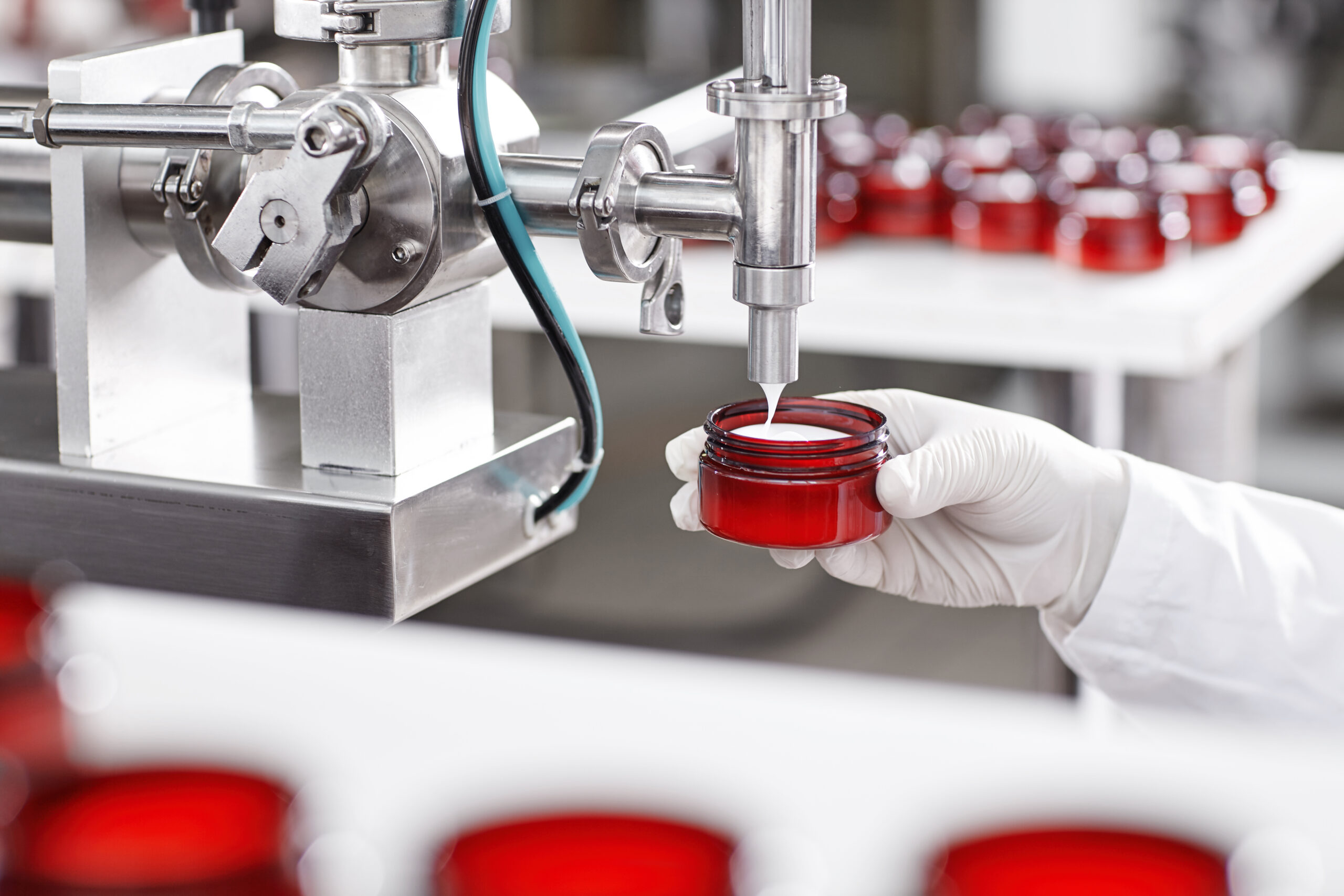
A process that works beautifully at 500 grams may behave differently when transferred to 10, 50 or 100 kilograms. Heating and cooling take longer. Powder incorporation changes. Mixing geometry changes. Shear changes. Aeration can become a problem. Even the order and speed of ingredient addition can suddenly matter much more.
When you are learning cosmetic formulation, it is very easy to focus entirely on whether you can successfully make your prototype. As you develop professionally, the question changes: Can somebody manufacture this formula repeatedly?
A commercially viable formula is not simply one that can be made once. It needs to be reproducibly manufacturable.
Regulation Is Sitting at Your Formulation Bench Too
Regulatory knowledge may not feel as exciting as creating your next silky emulsion, but it is part of professional cosmetic formulation.
For products intended for the European Union, regulatory considerations cannot simply be added once your formula is finished. One of the first points will be to only use allowed cosmetic ingredients, and to verify that you are not exceeding dosages when adding ingredients to your formula.
Every finished formula that you would like to launch will also need to undergo a safety assessment (+ stability & challenge tests) resulting in a Cosmetic Product Safety Report. The Product Information File also brings together important information relating to the finished product, including its safety documentation, manufacturing method and GMP compliance and, where justified, evidence supporting claimed effects.
For you as a future cosmetic formulator, the important lesson is that decisions made at the formulation bench can influence what happens later during safety assessment, testing, claims development, manufacturing and regulatory compliance.
Learning to formulate with compliance in mind from the beginning can prevent extremely expensive reformulation later.
Why Professional Cosmetic Formulation Expertise Has Value
Eventually, you may formulate products for your own business, work inside a cosmetic laboratory or manufacturer, or offer cosmetic formulation services to clients. When that happens, remember something important: you are not simply selling a recipe.
Your value lies in the expertise required to make hundreds of interconnected decisions before a formula becomes a commercially viable cosmetic product.
That includes ingredient research, supplier documentation review, prototype development, troubleshooting, sensory optimisation, compatibility decisions, preservation strategy, manufacturing considerations, regulatory awareness and cost optimisation.
Most importantly, you are developing judgement.
Knowing that Ingredient A thickens a formula can be learned from a technical data sheet. Knowing why it may behave differently in this particular emulsion, with this electrolyte-rich active system, at this pH, in this packaging and at manufacturing scale is where professional formulation experience becomes valuable.
A Good Formula Is More Than a Formula
As you continue learning cosmetic formulation, try to move away from asking only, “Does this formula work?”
Start asking bigger questions.
Can it be manufactured? Is it stable? Does the preservation strategy make sense? Is the texture appropriate for the packaging? Are the ingredients suitable for the intended market? Is the formula unnecessarily expensive? Can it realistically be scaled? Does every ingredient have a reason for being there?
That is when you start thinking like a professional cosmetic formulator.
Behind every percentage point is a decision. Behind every prototype is something to learn. Behind every ingredient that stays, changes or disappears is a balancing act between chemistry, safety, sensory experience, regulation, manufacturing and commercial reality.
And when all those little decisions finally come together into a product that is stable, manufacturable, compliant, commercially sensible and genuinely lovely to use?
That is when the magic in the beaker becomes professional cosmetic formulation.
Here’s to formulas that work and brands that thrive!
From my lab to yours,



Add comment