Geo Skincare 2026: Formulating for Climate-Adaptive Beauty
Geo Skincare 2026: Formulating for Climate-Adaptive Beauty
Let’s stir up some magic in the lab with today’s hot topic: geo skincare, the fast-growing movement that treats your customer’s climate, not just their skin type, as the starting point for great formulation.
If you have been keeping half an eye on the bigger skincare trend reports this year, you have probably already seen the term geo skincare or climate-adaptive beauty floating around. It is easy to file it under yet another buzzword, but I want to convince you it is worth taking seriously, both as a formulator and as a business owner. Climate change is no longer just an environmental talking point for your brand values page. It is quietly becoming one of the biggest variables in how skin actually behaves, and the brands paying attention to that shift right now are the ones building genuinely differentiated products.
Why Climate Has Become a Skin Health Issue, Not Just a Weather Story
Here is the part that tends to surprise founders when I explain it in consultations. This is not a soft, feel-good sustainability angle. It is a dermatological one. Research modelling published in the journal Photochemical and Photobiological Sciences has linked rising global temperatures to a projected increase in skin cancer cases by 2050, and separate research consistently links airborne pollutants, including wildfire smoke and storm-driven dust, to flare-ups of conditions such as acne, eczema and psoriasis. On the consumer side, Euromonitor data shows that roughly sixty percent of Millennials and Gen Z now actively seek out products designed to withstand heat, pollution and sweat, which tells you this is already shaping purchasing decisions, not just future forecasts.
Market analysts are backing this up with real numbers too. Croda Beauty projects the climate-adaptive skincare category will grow at a compound annual rate of around fourteen percent through 2034, while more specialist market research puts climate-adaptive beauty products on an even steeper growth curve as brands move from a handful of hero products into broader commercial ranges. Put simply, your customer’s skin barrier is under more pressure than it used to be, and they are starting to notice.
What Geo Skincare Actually Looks Like on the Market
A handful of brands have made this concept genuinely tangible, and I think it is worth studying what they are doing well. American brand Pour Moi built an entire concept around what it calls geo-hydration, developing a patented complex that blends hyaluronic acids of different molecular weights with an adaptogenic white truffle extract, then differentiates formulas by region and climate zone, using vegetable squalane for temperate climates and hydrogenated coco-glycerides for tropical ones. In direct response to wildfire seasons on the American west coast, the brand also launched a serum designed to form a protective film that helps limit smoke particle penetration into skin.
Haircare has caught up too. Italian brand Climaplex formulates specifically around frizz, dryness and pollutant build-up caused by shifting climate conditions, using naturally derived actives such as niacinamide, bisabolol, grape skin extract and calendula to help restore the hair fibre’s resilience. Meanwhile, colour cosmetics giants are not sitting this one out either, with Shiseido and L’Oréal Paris both releasing climate-adaptive foundation technologies designed to resist heat, humidity and sebum while still protecting against UV and blue light.
In Japan, the seasonal dimension of this trend is especially advanced. Research into what is locally termed spring cosmetics, formulated to address pollen sensitivity and rising UV exposure, has reportedly doubled over five years, and Shiseido’s Ihada range has built protective powders and sprays specifically to limit pollen and fine particle adhesion to skin. European brands are starting to borrow the same logic, with Clarins positioning its multi-protection UV daily shield around defence against pollution, blue light and pollen in a single formula.
Formulating for Climate: What This Means for Your Lab Bench
This is where geo skincare stops being a marketing story and becomes a genuine formulation brief. Honestly, it is one of the more exciting technical challenges I have seen come through the industry in a while.
Here is how to approach this brief at the bench:
- Climate-Targeted Active Complexes: Start thinking about your active complex through an environmental lens rather than a generic skin type descriptor. Adaptogenic botanicals, antioxidant networks, and barrier-supporting lipids should be weighted differently depending on your target environment. Matching your active selection to a real environment, such as pairing desert-adapted cactus extract for arid climates or coastal samphire for alpine conditions, is where genuine innovation happens.
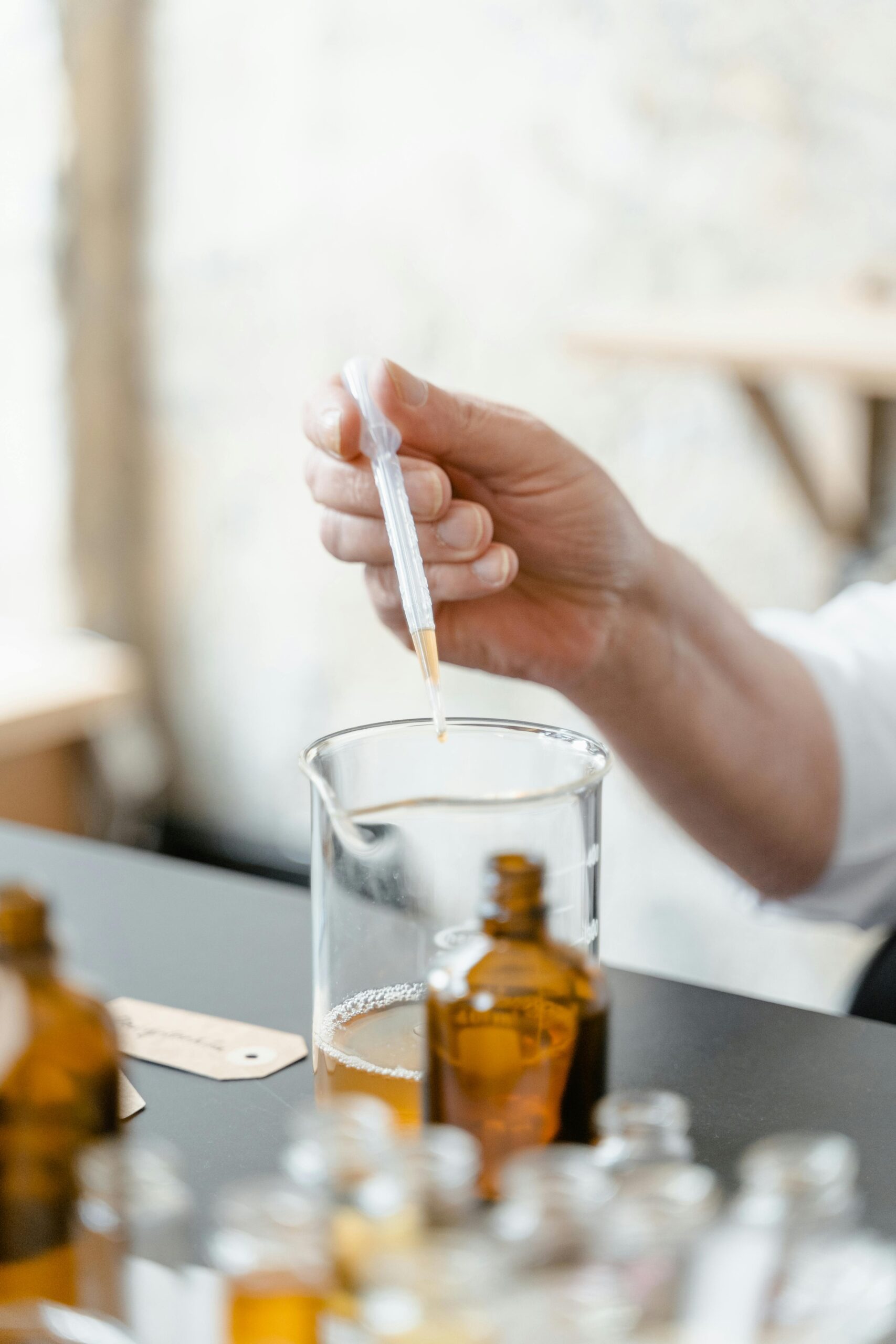
- Upgraded Stability Testing Protocols: If you plan to market a product as heat-stable or humidity-resistant, standard testing will not suffice. For context, brands like Renée Rouleau run ranges through heat stability testing at a constant 46°C and 70% humidity for six weeks to three months to confirm performance for extreme heat markets. Your testing protocols must be rigorous and fully documented.
- Resilient Packaging Selection: Climate resilience must be baked into your packaging brief from day one. Plastics and closures that degrade, warp, or allow excessive moisture vapor transmission under extreme heat will quietly undermine an otherwise beautifully engineered formula.
🧪 From Concept to Bench: If building out a climate-responsive active complex or establishing rigorous stability protocols is on your product roadmap, this is exactly the kind of project I love developing with lab clients. Let’s collaborate: contact us here!
The Compliance Angle You Cannot Skip
Because I would never send you off excited about a trend without flagging the regulatory side, let’s talk claims. Under EU Regulation 1223/2009 and the common criteria set out in Regulation 655/2013, you can absolutely market a product as suited to specific climates, resistant to humidity, or protective against pollution, provided you can substantiate that performance with proper testing data. What you cannot do is imply a product prevents climate-related disease, including cancer risk reduction claims, without falling into medicinal or misleading claim territory, and any specific climate performance claim, such as heat stability at a given temperature or humidity resistance over a stated time, needs a test protocol behind it that would hold up under scrutiny from your Cosmetic Product Safety Report assessor.
⚖️ Regulatory Support: Don’t risk a product recall or an audit failure over unverified environmental claims. We help you align your marketing stories with a bulletproof CPSR file. Protect your business from compliance audits with our Cosmetic Compliance & Labelling Guide E-Book.
Bringing Geo Skincare Into Your Own Brand
You do not need Pour Moi’s budget or a full climate-zone product matrix to start applying this thinking. Begin by getting genuinely specific about where your core customer lives and what their skin is actually up against, whether that is a humid coastal city, a dry continental winter, or an urban environment with heavy pollution. Let that inform your active complex, your texture choices and your seasonal messaging, rather than defaulting to generic skin type language that could apply to anyone anywhere.
If you want to go deeper on building this kind of environmentally responsive formulation strategy into your product roadmap, my courses at MB Cosmetic Academy walk through active selection and stability planning for exactly this kind of brief [internal link placeholder: cosmetic formulation course].
🎓 Master the Skill: Want to design an environmentally responsive product line from scratch? Our advanced modules at MB Cosmetic Academy walk through active selection, synergy, and stability planning for advanced briefs. Explore our courses here!
Climate-adaptive beauty is not a passing headline. It reflects a real, measurable shift in what skin is dealing with every single day, and the brands that formulate for that reality, honestly and with proper substantiation behind every claim, are the ones building genuine long-term trust with their customers. This is a trend I would genuinely encourage you to lean into rather than wait out.
Over to You in the Lab…
Have you noticed a shift in what your customers are asking for regarding sweat-resistance, pollution defense, or seasonal skin changes? How is your current product line adapting to these shifts? Let me know in the comments below!
Here’s to formulas that work and brands that thrive!
From my lab to yours,
Rose



Add comment